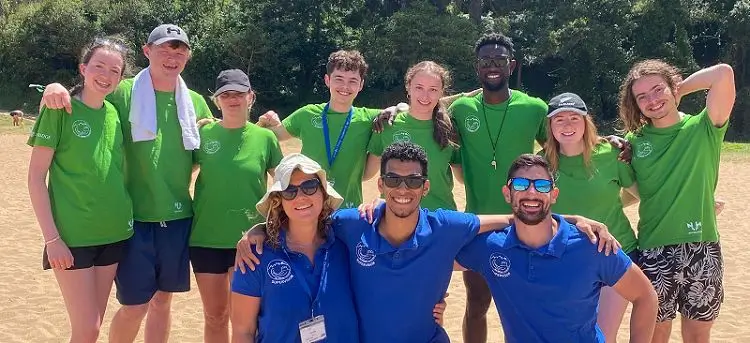


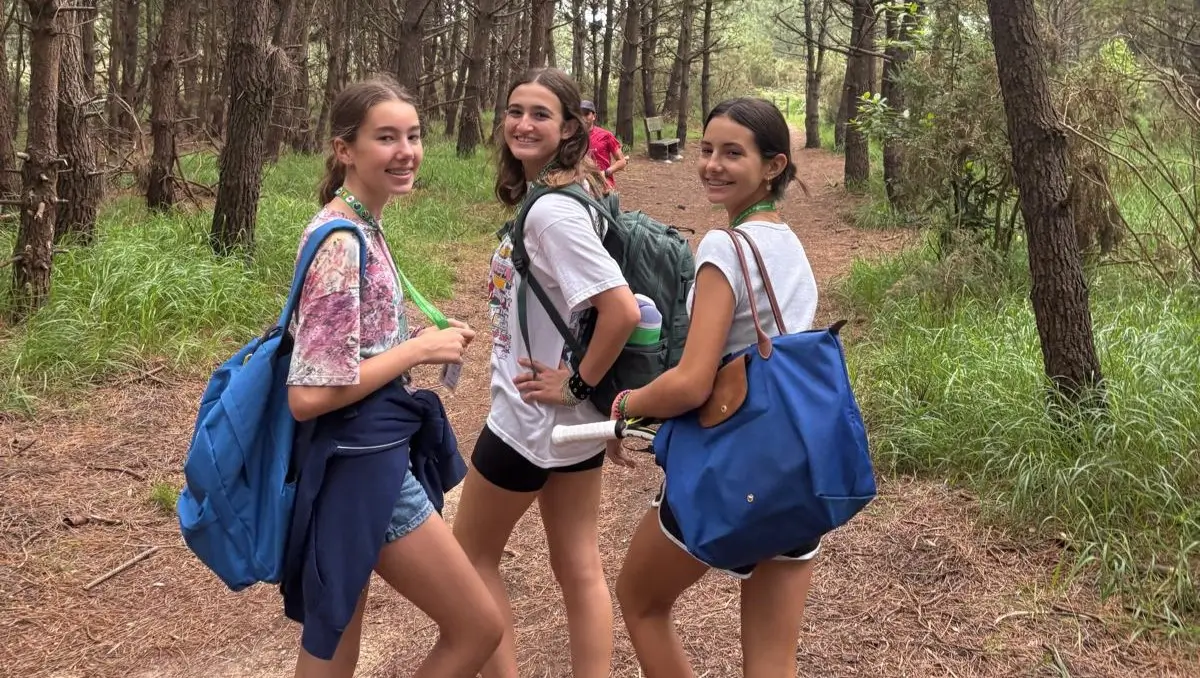
When a family starts looking for summer camps, they often encounter a very common feeling: everything seems the same. The websites promise fun, learning and unforgettable experiences, but few clearly explain what kind of experience the child or teenager will actually have.
At The Village, we see this time and time again. Families who do not hesitate because there are not enough options, but because they do not know how to compare them. And that's normal. Choosing a camp is not just about choosing an activity for the summer; it's about deciding what kind of experience you want your child to have for several weeks.
Before looking at prices, dates or locations, it's worth pausing for a moment and understanding something fundamental: not all camps pursue the same thing, nor are they designed for the same type of child.
Not all camps offer the same experience
One of the first things we clarify at The Village when we speak to a family is that the differences between camps are not only in the activities listed in the programme. They are in the way the day-to-day is experienced.
There are camps that function as a sum of separate activities and others that are designed as a continuous experience, where everything that happens during the day makes sense within the same approach. This difference is key, as it affects both learning and the well-being of the participant.
When the camp is well structured, the child doesn't just "do things", but has a complete experience, with routines, relationships, and learning that are built up gradually.
Urban camps and residential camps
One of the first criteria that help to sort out options is the format. Urban camps allow the child to return home every day. They are usually a good fit when looking for a work-life balance or when the child is not yet ready to spend several days away from the family environment.
Residential camps, on the other hand, involve living away from home for a continuous period. This shared living brings about a major change: the child begins to make small decisions, adapt to new routines, and interact in a more independent way with their environment.
Based on The Village's experience, when a child is emotionally ready, this type of camp usually has a much deeper impact. Not only because of the duration, but because everything that happens is part of the learning process, not just the scheduled activities.
The approach matters more than the label
Another common mistake is to focus solely on the camp's label: sports, creative, educational, language. Although these categories help to guide you, they do not in themselves explain what the real experience will be like.
At The Village, we understand activities as an educational tool. Sport, music, theatre or any other activity are not an end in themselves, but contexts where participants interact, communicate and gain confidence.
Two camps can offer similar activities and yet generate completely different experiences. The difference lies in how those activities are supported, the role of the educational team, and what is encouraged beyond entertainment.
Language camps and bilingual camps
This is one of the most frequent questions we receive. Although they are often used as synonyms, a bilingual camp and a language camp do not work the same way.
In a bilingual camp, the language is usually alternated. Part of the day is spent in Spanish and part in another language. This can be useful as a first contact, but it limits real exposure to the language.
In an immersion camp, like the one at The Village, the language becomes the language of living together. English is not reserved for a specific moment of the day, but is used to communicate, play, solve everyday situations and interact with others. That continuity is what allows the language to stop being a barrier and start to be used naturally.
Age completely changes the experience
One of the factors that most influences how a camp is experienced is the age of the participant. Not just because of age, but because of the personal and emotional stage they are at.
At The Village, we see every summer that when the programme is not well adapted to the stage of life, the experience loses its meaning. That is why it is important to understand what a child or teenager usually needs at each moment.
Generally speaking, at younger ages the following are usually sought:
- a first experience away from home
- to feel safe and supported
- to learn to get along with other children
- to gradually gain confidence
In these cases, opting for specific programmes such as English camps for children usually makes a big difference.
However, in adolescence, other very different needs arise:
- greater autonomy
- deeper social relationships
- feeling part of a group
- expressing and communicating without fear
That is why English camps for teenagers require a different approach, where shared living and group identity play a key role.
When the environment makes the difference
The environment is not just the place where you sleep or do activities. It is an active part of the experience. A cared-for, safe and well-organised space directly influences how participants feel from the very first day.
At The Village, we have seen how contact with nature, the right facilities and an environment designed for group living help children and young people to relax and open up more easily to the experience.
A good environment especially encourages:
- interaction among participants
- disconnecting from daily routine
- participation in activities
- emotional well-being
When the environment supports you, learning flows much more easily.
How to start narrowing down options with criteria
At this point, many families realise they don't need to keep comparing dozens of camps. It's enough to start narrowing down with criteria.
At The Village, we usually recommend pausing and asking yourself a few simple questions before continuing your search:
- what kind of experience do I want my child to have this summer?
- are they ready to live away from home for several days?
- do I prefer a more playful approach, a more educational one, or a combination?
- what level of support do I need as a parent?
Answering these questions calmly greatly reduces the number of options and clarifies the way forward. From there, the choice is no longer overwhelming.
Choosing calmly is also part of educating
Choosing a summer camp should not be an impulsive decision. It is an opportunity to show children that important experiences deserve reflection and time.
At The Village, we believe this process is part of education. Gathering information, comparing and deciding with criteria teaches children and young people to face new experiences with greater confidence and responsibility.
When the choice is made calmly, the experience is usually more positive, both for participants and for families.
If you are at that initial stage of searching, learning more about our way of understanding camps and the team that supports the participants may help you. You can do this at quiénes somos.