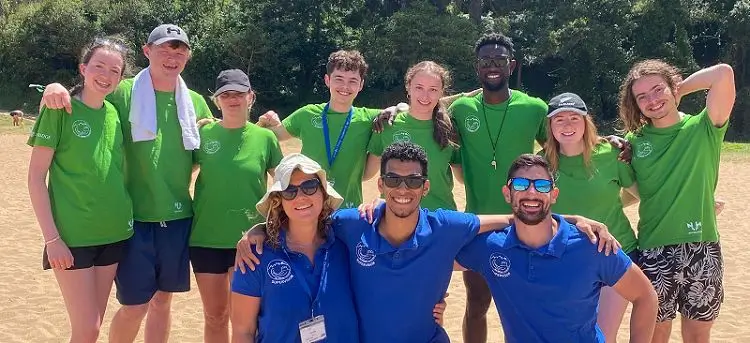


Every summer, thousands of parents face the same question: how to make their teenager make the most of the holidays, have fun, and at the same time improve their English. The options often seem similar: intensive courses, academies, online platforms. But none achieves the most important thing: awakening in young people the real desire to communicate.
How English camps transform teenagers
In adolescence, learning no longer depends only on what is taught, but on what they experience. That’s why an English camp is not just another activity, but an experience that redefines the teenager’s relationship with the language, with others and with themselves. It’s not about memorising, but about starting to think in English. About understanding that the language can be an open door to the world, not just another subject.
This transformation happens when the environment is truly designed for their stage of life — as in an English immersion summer camp in Spain for teens, where language becomes a shared experience rather than a lesson.
Adolescence is not a problem, it’s an open door
For years, adolescence has been described as a complicated stage. But those who work with young people know that it is just the opposite: it is the most powerful time to learn, decide and be transformed. Teenagers don’t want to be told what to do, they want to understand why they should do it. They want to discover, experience, and feel that learning makes sense.
At this age, traditional methods fall short. A book or a lesson can’t compete with the adrenaline of a match, the thrill of the stage or the connection of a conversation with someone from another country. That’s why English camps for teenagers work: they turn the language into a living experience, a form of social connection, a tool for belonging.
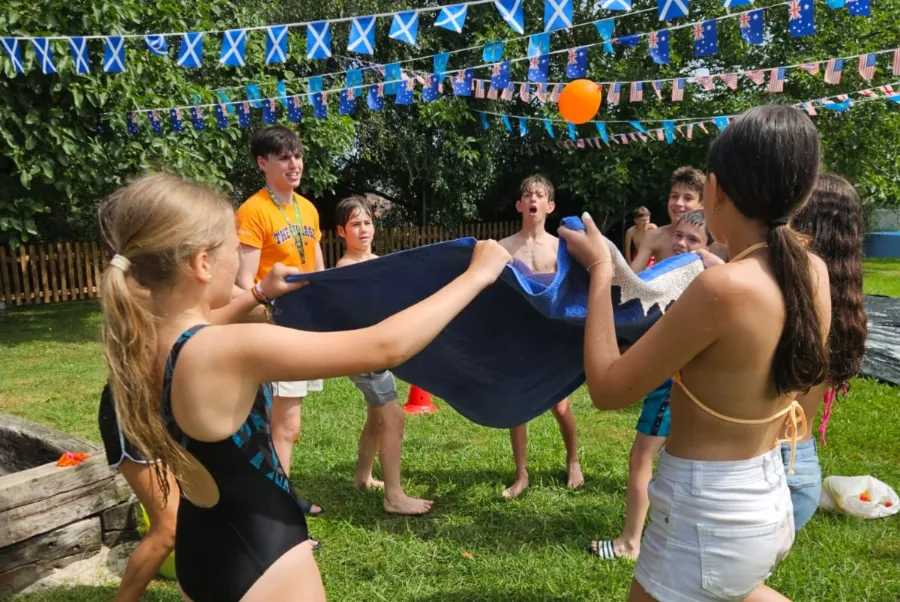
In such an environment, English ceases to be an obstacle and becomes a shared code. It’s not about teaching young people, but about giving them an environment where English is the natural language of each experience. When they talk to organise a game, prepare a performance or tell a story in a group, they are not studying: they are learning without realising it.
And that’s where the transformation happens. The moment the teenager loses their fear of making a mistake, they start to gain something much bigger than vocabulary: confidence.
English is not taught, it’s contagious
English is not learned sitting in front of a book, it is absorbed by living it. Teenagers learn the language as they learn a song that excites them: by listening to it again and again, repeating it, making it their own. In an immersion camp, the language stops being a mental exercise and becomes a tool for living together, laughing, organising or solving small everyday challenges.
When a young person has to ask something from a foreign classmate, explain a move in a game or rehearse a theatre scene, English stops being an obligation. It becomes the key that opens all conversations. In this context, learning happens effortlessly: the need to communicate is the best teacher.
Teenagers learn quickly because they learn with emotion. They do not seek grammatical perfection, they seek to understand and to be understood. In each interaction they gain fluency, lose their fear of mistakes and discover that they can communicate much better than they thought. That sense of achievement, that newfound confidence, is what makes the language stop being a wall and become a bridge.
In a genuine English camp, words are not memorised: they are lived. They are linked to moments, laughter, challenges and friendships. That’s why the learning that comes from living together is deeper, more lasting and, above all, more human.
Three moments that change a teenager in a camp
There are moments that leave a mark, moments when a teenager realises that something in them has changed. In an English camp, these moments are repeated every day, even if sometimes they go unnoticed. They don’t happen in a lesson, but in the middle of a conversation, a laugh or a farewell.
The day they dare to speak without fear
At first, many teenagers arrive with the idea that their English “isn’t good enough”. They worry about pronouncing badly, making mistakes or going blank. But there comes a moment —often without realising— when they speak without thinking, improvise, laugh at their mistakes and move on. It is then that they discover they can communicate, that they don’t need to be perfect to be understood. That first step changes their relationship with the language and with themselves.
The day they put down their phone and go out to laugh in the rain
In a natural setting free from screens, young people rediscover fun without filters. Group dynamics, outdoor games and sports bring back the spontaneity that’s sometimes lost in routine. In this context, English flows naturally: not as a task, but as part of a shared life.
The day they say goodbye to their new international friends
On the last night, when the camp comes to an end, teenagers realise how much they have grown. They say goodbye to friends they didn’t know two weeks before, to classmates with whom they now communicate only in English. They understand that the language was the key to creating real bonds, and that their confidence in speaking no longer depends on a classroom, but on lived experiences.
They are simple but powerful moments. In them, English stops being a subject and becomes a natural part of their story.
An environment that awakens them
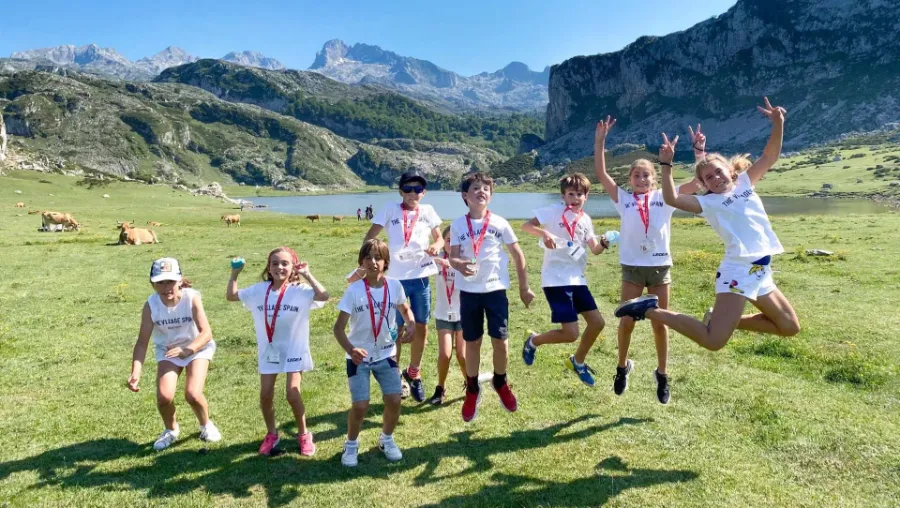
The environment in which learning happens is as important as the method itself. Teenagers need a place that takes them out of routine, that offers them freedom and inspires them to explore. A space where they can breathe fresh air, look far and disconnect from everyday noise. That’s why Asturias has become one of the most special settings in which to experience an English camp.
The green nature, the nearby sea and the mountains create a perfect balance between calm and energy. In this environment, young people feel free and safe at the same time. Each day becomes an adventure: a match in the field, an excursion along the coast, a creative afternoon under the trees. Without realising it, English becomes the natural language of these experiences, the thread that connects each one.
When the body is active and the mind relaxed, learning multiplies. Teenagers associate the language with moments of joy, with achievements and with the sense of belonging to something. It’s not just learning English, it’s living it in an environment that awakens them, gives them fresh air and pushes them to discover what they are capable of.
The perfect combination: freedom and safety
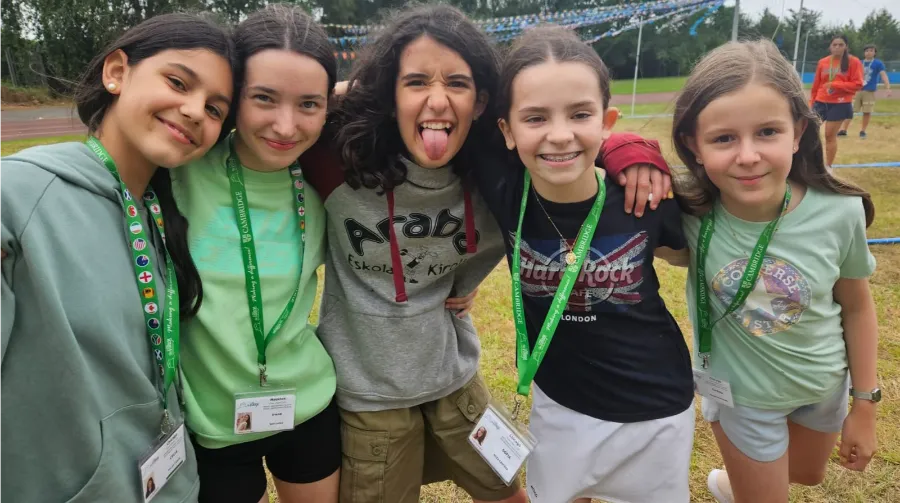
For parents, choosing a camp involves a constant question: will they be alright? For teenagers, the question is different: will they let me be myself? Finding the balance between the two is what makes a camp a truly transformative experience.
A good programme for teenagers offers freedom with clear limits. It lets them decide, explore and make mistakes, but always within a caring environment. Safety is not imposed, it is felt. It’s present in the monitors who know their names, in the international coaches who accompany them in each activity and in the team that ensures everything flows without rigidity or pressure.
When the teenager knows they can trust, they dare to do more. And when parents trust, the experience is complete. That balance between independence and protection is the secret that lets both —parents and children— experience the camp with peace of mind.
Guided freedom is what teaches them to decide, to live together and to grow. That is why safety is not just a guarantee, but the foundation on which teenagers discover their autonomy and parents rest easy knowing they are in good hands.
What they take home
When camp is over, teenagers return home with more than just a suitcase full of used clothes and memories. They return with a new way of expressing themselves, with a confidence they didn’t have before and with a feeling that is hard to explain: that of having grown up.
The change is not measured in grades or certificates, but in gestures. In the way they dare to speak English without fear, in how they listen attentively to others, in the curiosity awakened by having lived with people from different countries. They have discovered that the language is not a barrier, but a door to a bigger world.
They also take away friendships that cross borders. In the days shared they’ve learnt to work as a team, to resolve differences, to laugh at mistakes and to celebrate the achievements of others. These experiences teach them something that appears in no book: empathy, tolerance, maturity.
English stays in their vocabulary, but the real learning remains in their attitude. They understand that they can communicate, adapt and dare to be part of something new. And that confidence, once acquired, is never lost.
The Village is the place where transformation happens
At The Village, every detail is designed so that this transformation happens naturally. It’s not just about learning English, but about creating the perfect environment for teenagers to discover who they are when they dare to speak, to live together and to think in another language.
For fifteen days, English becomes the common language among young people of more than twelve nationalities. It’s not a class or an exercise: it is the way they communicate to play, organise, introduce themselves or laugh. More than two hundred hours of exposure to the language means that English stops being an external tool and becomes part of their everyday life.
The environment plays its part. A four-star hotel, a sports campus of over fifty thousand square metres, the Asturian countryside and an international team of coaches create the perfect balance between comfort, safety and excitement. Each participant knows they can explore freely, safe in the knowledge that there is always someone nearby to guide them.
What happens at The Village is not a course, it is an experience. It is the meeting point between learning and real life, between language and emotion. Here, teenagers not only improve their English, but also discover the confidence to communicate with the world.
English doesn't just change the way they speak, it changes the way they see the world
When a teenager experiences a camp like this, they don't come back the same. Something in their gaze changes. They learn to communicate, but also to listen, to adapt, to trust themselves. They discover that English is not a goal, but a tool that connects them to different people, cultures and ways of thinking.
That discovery is never forgotten. It makes a difference that goes far beyond the summer. Because what is learned in living together, in shared laughter, in the small decisions of daily life, stays within. The language ceases to be an effort and becomes part of their identity.
There are summers you enjoy and others that transform you. This is one of the latter. At The Village, every young person finds the space to grow, learn, and return home with something no course can teach: the certainty that they can communicate with the world, with confidence and authenticity.