


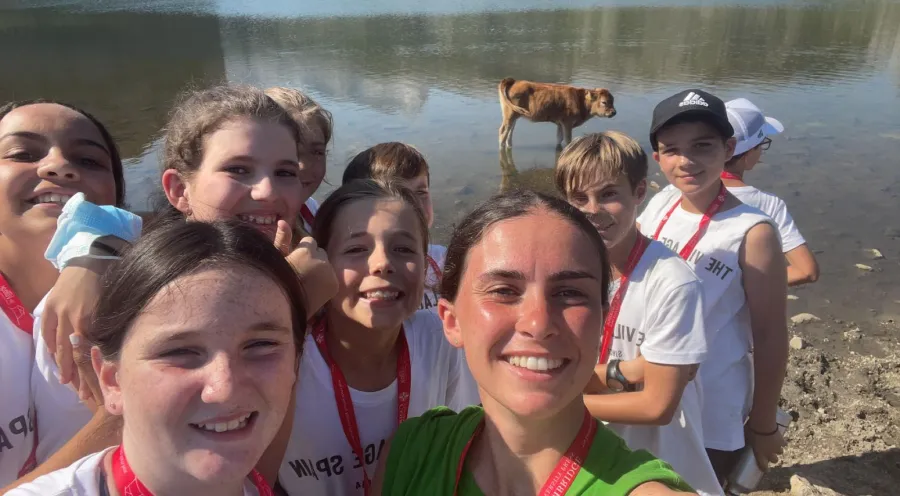
During the school year, many families do everything “right” to help their children learn English: academies, extra tuition, additional activities, even intensive courses. However, when the year comes to a close, the feeling is often similar: they understand more, but still don’t speak fluently.
This doesn’t happen because the child or teenager lacks ability, nor because the method is bad. It happens because the context doesn’t help. Learning a language doesn’t just depend on what is taught, but on how and when it is experienced.
Summer introduces a profound change to that context, and that’s where it starts to make a difference.
When English is lived rather than studied, progress becomes more natural. That’s why families looking for real results often choose an international English immersion summer camp in Spain, where the language becomes part of everyday life instead of an academic subject.
English during the school year: conditional learning
During the school year, English usually occupies a very specific and limited space. It’s just another subject within a day already packed with stimuli, rules and obligations. It comes after hours of classes, homework and other activities, when mental energy is at its lowest.
In that scenario, the language is easily associated with:
- constant correction
- fear of making mistakes
- pressure to “do it right”
Speaking English isn’t experienced as a tool for communication, but as an assessed situation. This explains why many children know structures and vocabulary, but avoid speaking when they have the opportunity.

What really changes when summer arrives
Summer isn’t just a matter of free time. It’s a change of mindset.
The urgency disappears, routines relax and the brain becomes more receptive to new experiences.
When English is introduced into this context, it no longer competes with other obligations. It’s no longer perceived as “another class”, but as part of what is happening. The language enters without resistance, because it doesn’t arrive accompanied by academic pressure.
This is where learning starts to become more natural.
Learning English without feeling like you’re in class
The great value of summer is that it allows English to be learned outside the classroom.
Not through repeated exercises, but through real use of the language in everyday situations.
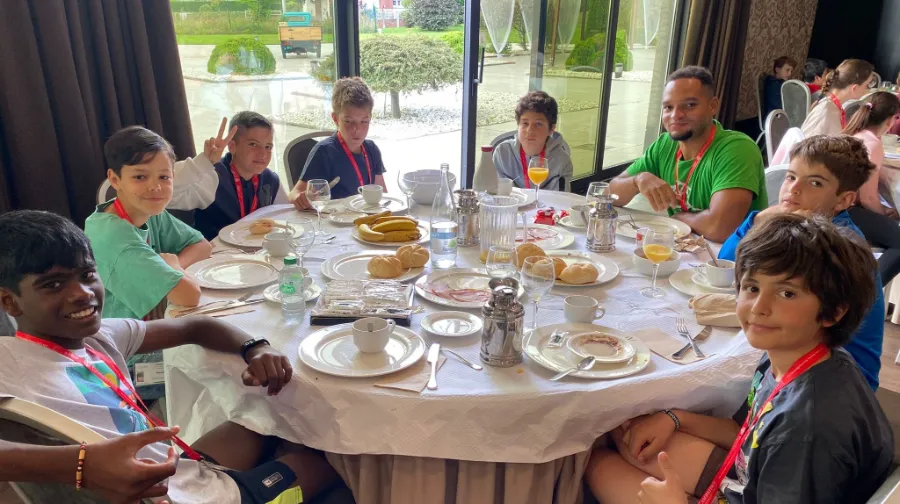
In camps with genuine immersion, like the Village, English doesn’t just appear at specific moments of the day. It’s used for living together, organising activities, solving small conflicts, joking or sharing experiences with the international team.
This constant use transforms the relationship with the language. English stops being something you study and becomes something you use because you need to.
English summer camp or intensive course: where the real difference lies
When families compare options for the summer, one of the most common doubts is whether to choose an intensive English course or an immersion camp. At first glance, the intensive course seems like a safe bet: more hours, more content, more “English”.
However, in practice, many intensive courses maintain the same mental framework as the school year. The language is still tied to a class, a teacher and constant correction. Even if progress is made theoretically, the barrier to speaking often remains.
On the other hand, in a well-designed English summer camp, the language is integrated into the entire experience. It’s not limited to a timetable or a specific space. It’s also used in informal moments, which are precisely where the fear of expressing oneself is most easily lost.
The value of living together for language learning
One of the great accelerators of learning in summer is living together.
Living, sharing and interacting in an environment where English is present naturally generates continuous exposure to the language, impossible to replicate in a traditional class.
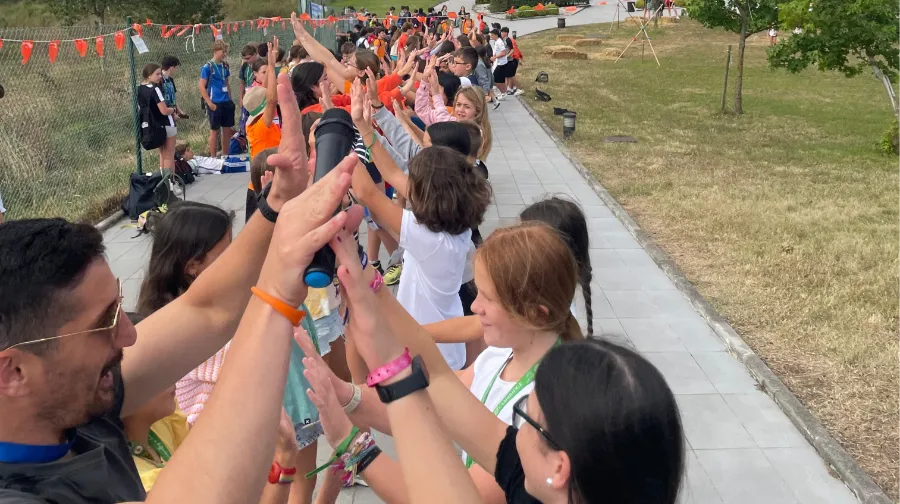
In experiences like those at the Village, living with the international team means English appears in spontaneous conversations, improvised games or everyday situations that aren’t scheduled. That’s where many participants start to speak without thinking too much.
Not because they know more grammar, but because they feel comfortable using the language.
The environment as part of learning
The place where the experience takes place also greatly influences how learning happens.
Natural environments encourage disconnection from everyday life and help participants lower their guard. When there are no classroom walls or school routines, communication flows in a different way.
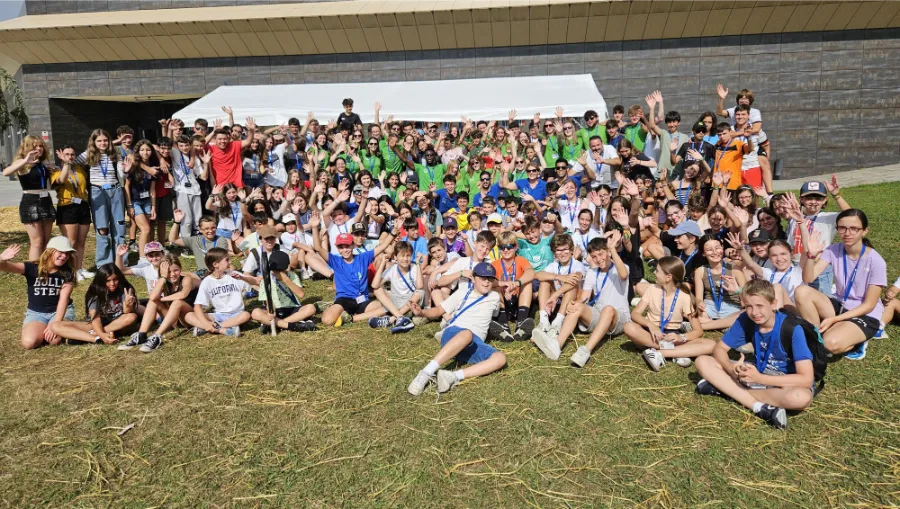
In regions like Asturias, where nature, outdoor activities and group life are combined, English is used in a variety of real contexts. Excursions, sports, creative workshops or simply sharing free time generate authentic communication situations.
The language stops being artificial and starts to become part of what is experienced.
What families notice after summer
The result of learning English in summer isn’t always immediately reflected in an exam or a certificate. Many families notice more subtle but very significant changes when their children return home.
There is more confidence when speaking, better listening comprehension and, above all, less fear of making mistakes. English is no longer perceived as something foreign or inaccessible, but as a language they can use.
This change in attitude is usually the first step for more solid learning to continue during the school year.