

When families start looking into English camps, they often come across programmes that are very well structured on paper. Clear schedules, appealing activities, and a set number of hours in English per day. However, one of the most important questions rarely comes to the forefront: who is actually with the children and teenagers throughout the whole day.
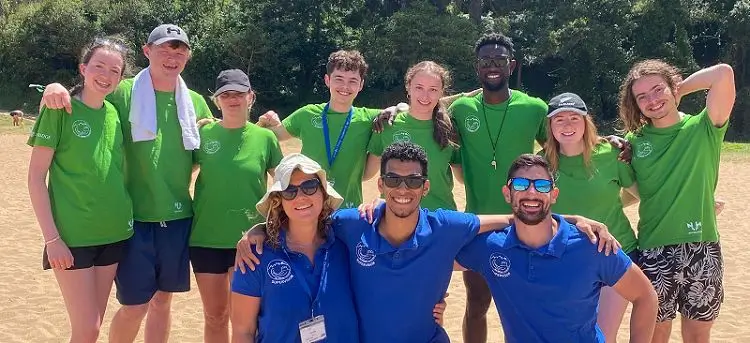
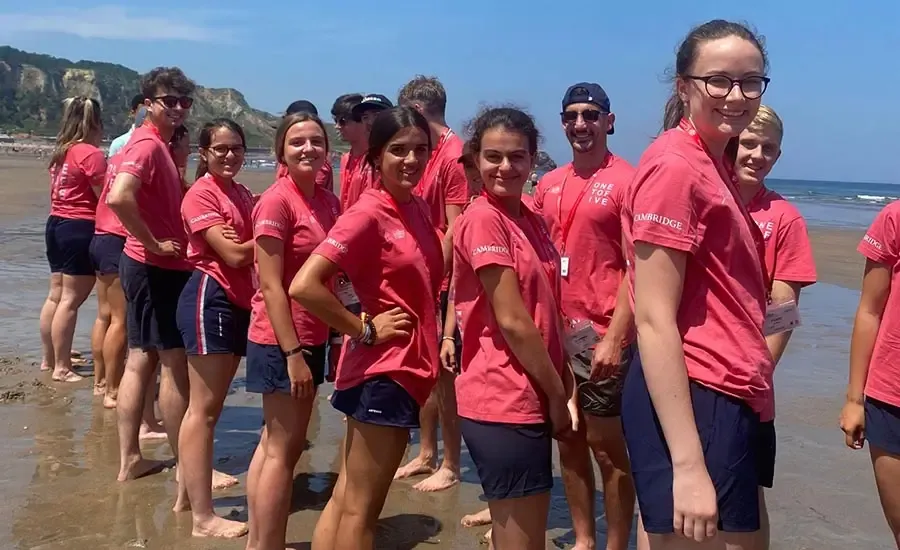
At the Village, immersion isn't based on timetables or isolated activities, but on the people who live alongside the participants from the beginning of the day until it ends. The international team doesn't just show up to run a particular activity and then disappear. They share breakfasts, accompany the group during transfers, take part in games, resolve minor conflicts, and are present in the quiet moments.
It's within this shared living that English begins to make sense. The participants don't switch languages because someone asks them to, but because it's the language used to communicate with those around them. An informal conversation while getting ready for an activity, a spontaneous explanation when a question arises, or a comment at the end of the day all form part of learning just as much as any planned dynamic.
In camps where the international team truly shares daily life, the language stops feeling artificial. At the Village, for example, it's common for children and teenagers to start out mixing words or trying to rely on Spanish during the first days, gradually becoming more confident in a natural way. Not because they're constantly corrected, but because the context invites them to use English to take part, connect, and feel included in the group.
This type of learning doesn't depend on linguistic perfection, but on continuity. When the same team accompanies participants throughout the whole camp and uses English as the usual language, a stable and coherent environment is created. That builds confidence, reduces initial embarrassment, and allows everyone to progress at their own pace, without pressure and without feeling judged.
This is why, when talking about real immersion, the focus shouldn't just be on the programme but on the team behind it. It's people who turn English into an everyday, lived experience, not just another subject during summer.
What it means to share daily life with an international team
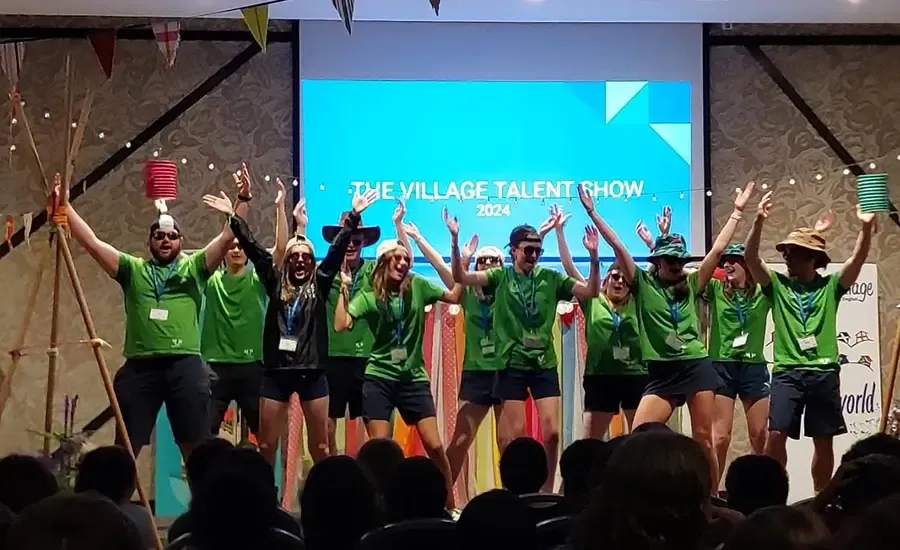
Talking about sharing daily life can sound abstract unless it's grounded in real situations. In a camp like the Village, living with an international team doesn't just mean hearing different accents during activities. It means sharing day-to-day life with people who experience the camp at the same pace as the participants.
Life together starts in the morning, when the team is present from the very first moments of the day. There's no formal "language switch" when a particular activity begins. English is used to organise groups, chat about how the night went, explain the plan for the day, or resolve small queries that arise spontaneously.
During meals, for example, the language is still present. Conversations don't revolve around exercises or constant corrections, but on everyday topics: which activity they liked best, how a trip went, what they're looking forward to in the afternoon. It's in these relaxed moments that many participants start to express themselves more freely, because they don't feel like they're "learning", just communicating.
At the Village, the international team is also present during times that don't appear on the schedule. Impromptu games, rest periods, walks around the grounds, or calm moments after a busy activity are all part of the experience. This continuity prevents English from seeming like something occasional and reinforces the sense of being immersed in an environment different from the usual one.
Another key aspect of this shared life is closeness. By spending so many hours together, the team gets to know each participant well: their confidence level, their insecurities, their progress, and their moments of being stuck. This allows them to provide natural support, without pressuring or forcing language use, respecting the individual pace of each child or teenager.
When the international team truly shares daily life, English stops being an explicit goal and becomes the means for connection. That's one of the reasons why many participants remember camp not as a place where they "had lessons in English", but as an experience where the language was part of everything that happened.
English out of the spotlight: when the most is learned
In most camps, the language appears when someone points it out. There's an activity, an instruction, a specific moment when it's "time" to speak English. However, many of the situations that have the greatest impact on children and teenagers aren't scheduled or set out in a timetable.
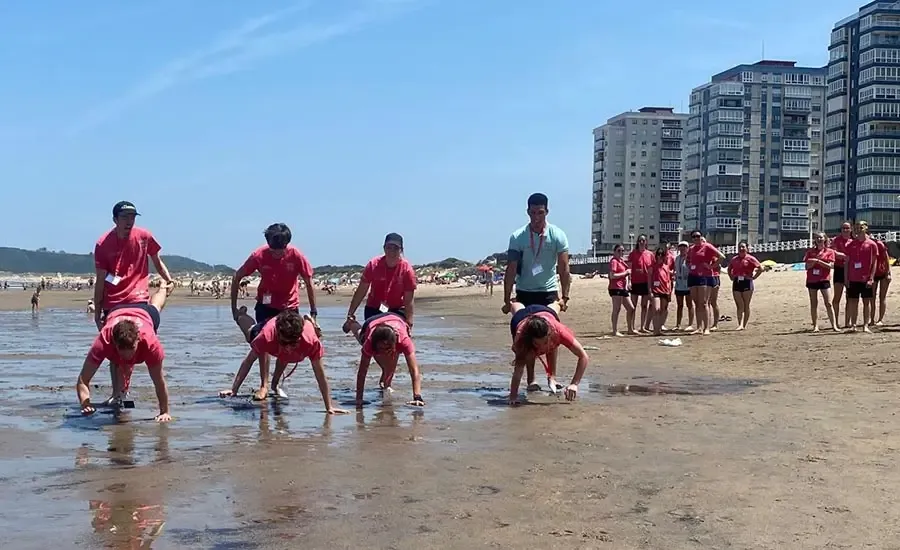
At the Village, these moments are a natural part of day-to-day life. They happen when a group can't agree during a game, when someone gets frustrated because something doesn't work out, when tiredness sets in after a busy day, or when a shared joke brings unexpected laughter. In these situations, English isn't the goal, it's the tool.
It's common for participants to express themselves first with simple phrases, mix words, or look for support in gestures. No one interrupts or constantly corrects them. The international team supports communication, naturally rephrasing and moving on. That lack of judgement is key for the language to flow.
Many parents comment afterwards that their children started to open up just when they stopped worrying about whether they were doing it "right". And that usually happens outside the most obvious activities: in a quiet conversation before bed, on a walk around the grounds, in a spontaneous comment while waiting their turn.
When English comes up in these everyday moments, it's linked to real emotions. To a shared win, to a small frustration overcome, to a friendship that's just beginning. That emotional connection is what makes learning longer-lasting and keeps the language from remaining just an academic memory.
This is why, in real immersion, progress isn't always measured by what is said in a particular activity, but by how participants start to use English when no one is asking them to. That's when you can see that the language has become part of their experience.

Continuity, coherence, and confidence
One of the aspects that most influences the camp experience —and that families are most concerned about— is the continuity of the team. It's not the same to meet different people every day as it is to share daily life with a stable group that supports the process from the start.
At the Village, the international team maintains a constant presence throughout the camp. That stability allows for relationships of trust and a predictable environment in which participants feel safe to express themselves, make mistakes, and try again. English isn't abandoned out of tiredness or switched for another language for convenience, because it's part of the daily routine from the very first moment.
Coherence is also seen in the small details. Rules are explained and reminded in the same language, activities are adapted to the group, and conversations flow without unnecessary interruptions. That consistency prevents English from being relegated to the background and strengthens the sense of living an experience different from the usual one.
For many families, this continuity translates into something very concrete: their children return more confident, not only in their level of English but in their ability to communicate in general. They know they've been supported by people who gave them space and encouragement throughout the process.
What remains when camp ends
When camp comes to an end, not all learning is immediately visible. Sometimes it's not about speaking with perfect fluency, but about having lost the fear of expressing oneself, understanding that the language is for connection, and having experienced English as something approachable.
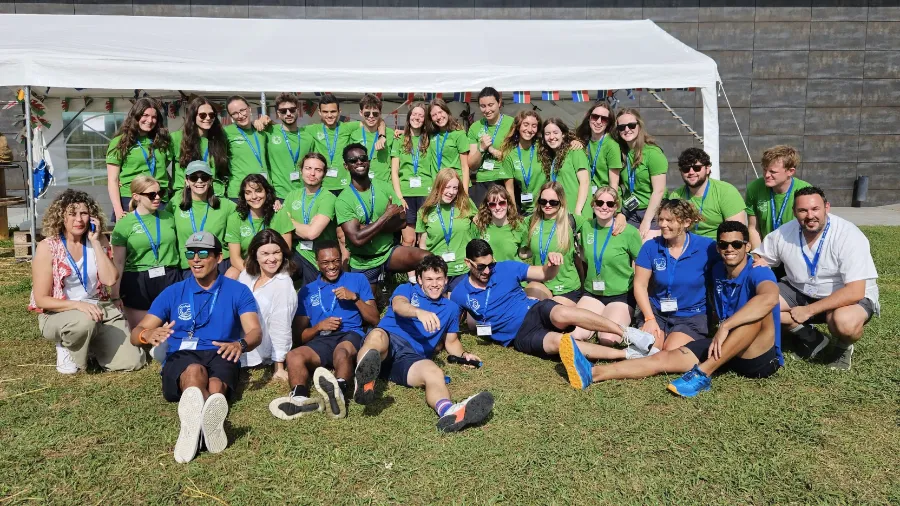
Many participants remember conversations, shared moments, or everyday situations where they had to communicate in another language without even realising it. Those memories are often linked to specific team members, a way of accompanying, and a shared daily life that made a difference.
That's where the true role of the international team in real immersion is understood. Not as an occasional resource in the programme, but as the element that sustains the whole experience. When the language is lived through real relationships and authentic situations, it leaves a mark that goes beyond the summer and stays with participants long after they return home.