

Summer is not just a break from school. For many children, it’s the time of year when they learn the most about themselves, about others, and about the world around them. While adults think about destinations or activities, children look for experiences that make them feel free, capable, and happy. And few opportunities bring all that together as well as an English camp.
Beyond the language, a camp is a stage where children discover themselves. They learn to live together, to solve small challenges, to communicate without fear and to trust their own voice. It is there, in the midst of a spontaneous conversation or a group activity, that English stops being a school subject and becomes a tool for life.
In places like the Village, that learning happens naturally. There are no blackboards or exams, just experiences. Children immerse themselves in an international environment where every conversation, every game, and every friendship reinforces their independence and confidence. What begins as a summer stay ends up becoming a boost for their personal growth.
In the following lines we will explore how an English camp can transform the way your child learns, relates to others, and sees themselves. Because when learning is experienced through emotion and real-life moments, the impact lasts far beyond the holidays.
Learning a language can change the way your child sees themselves
English is much more than a set of grammar rules or vocabulary. It is a gateway to new ways of thinking, expressing oneself, and connecting with the world. When a child learns a language in a real-life setting — as happens in an immersion camp — the change happens not only in their mind, but also in the way they see and value themselves.
At the Village, this transformation is noticeable from the very first day. Children don’t “go to English class,” they live it. They communicate with international coaches, play, solve everyday situations and, almost without realising it, begin to express themselves naturally. That small leap — daring to speak, to understand, to be understood — marks a before and after in their self-esteem.
From classroom to real environment
At school, language learning is usually theoretical and predictable. In contrast, a camp turns every moment into an opportunity to practise: asking for a towel, collaborating in a team game, chatting during meals. Everything becomes a real context for learning.
This continuous exposure to English breaks down the barrier of fear and removes the pressure to “speak perfectly.” Children learn that communication is much more than not making mistakes: it’s about expressing oneself, understanding others and being understood. The language, then, ceases to be a subject and becomes an everyday tool.
The emotion of achievement
Nothing boosts confidence more than realising you are capable. Every time a child notices that they can hold a conversation, understand an instruction or make someone laugh in another language, they feel an inner victory. It’s a spark of pride that turns into motivation.
At the Village, coaches support this process with closeness and empathy. They correct without interrupting, celebrate progress and encourage every child to dare to speak, without fear of making mistakes. In this way, English is associated with the positive excitement of achievement, not the stress of an exam. And that emotion is the foundation on which a confidence that will last a lifetime is built.
Living together as an engine for emotional development
Learning English at a camp is not just about mastering a language, but about learning to live together. In an environment where every child comes from different places, customs and ways of thinking, living together becomes the real school of growth.
In the Village, this learning arises from the everyday. Sharing a room, collaborating in an activity or taking part in a team game requires empathy, patience and respect. Children learn that words are not enough: gestures, listening, and adaptability also matter.
Cooperating, sharing and listening
Daily coexistence teaches more than any manual. Through the small challenges of everyday life — agreeing, waiting their turn, getting organised or helping a friend — children develop social skills that will serve them at any stage of life.
When these dynamics happen in English, emotional learning multiplies. In trying to communicate, children discover the importance of expressing themselves clearly, listening attentively and understanding differences. They don’t just learn a language: they learn how to connect.
Learning from others: the richness of cultural diversity
An international camp is a mirror of real life. At the Village, young people from up to twelve different nationalities live together, making every day an opportunity to discover new perspectives. Diversity isn’t taught, it’s lived.
Children discover that there are many ways to understand the world, and all are valuable. They learn that accents are part of identity, that different customs do not divide, but enrich. That open-mindedness — so hard to pass on in a classroom — becomes one of the deepest lessons of the summer.
In this multicultural environment, English ceases to be an end in itself and becomes a bridge. A bridge that unites, that teaches empathy, and that helps children look at the world with curiosity and respect.
The independence that blossoms away from home
Some lessons can only be learned when children move a little away from their family environment. Being away from home does not mean losing security; on the contrary, it is the perfect opportunity to discover it within themselves. In an English camp, that independence isn’t imposed: it is nurtured day by day, with support and trust.
At the Village, every small act is part of the growth process. Packing their bag, organising their clothes, choosing which activity to do or asking for help in English are experiences that reinforce autonomy. Without realising it, children learn to make decisions and take on responsibilities, always in a controlled and safe environment.
Making decisions, taking on responsibilities
Many parents are surprised by the change when their children return from camp. Children who used to ask for help with everything are now more resourceful, more self-assured. That transformation doesn’t happen by chance: it happens because for two weeks they have had space to make choices, make mistakes and try again.
The dynamics at the Village are designed precisely for this: to give them progressive freedom. The coaches observe, guide and support, but allow the children to learn from experience. Knowing how to choose, collaborate, manage time or look after their belongings are small responsibilities that become big steps towards maturity.
The security of knowing you are capable
Independence is not measured by distance, but by confidence. When a child realises that they can solve a problem, communicate in another language or adapt to a new group, they feel they can do much more than they ever imagined. That feeling of “I am capable” is the foundation of all personal security.
At the Village, coaches pay special attention to this aspect. It’s not about pushing, but accompanying the process so that every achievement, no matter how small, is experienced as a real step forward. The confidence that grows in that environment does not stay at camp: children take it home, to school and into everyday life, as a seed of growth that will continue to blossom.
Coaches as references for personal growth
Behind every transformative experience are people who make it possible. At an English camp, coaches are much more than supervisors: they are mentors, guides and role models. Their role goes beyond teaching the language, because their real task is to accompany the human development of each child.
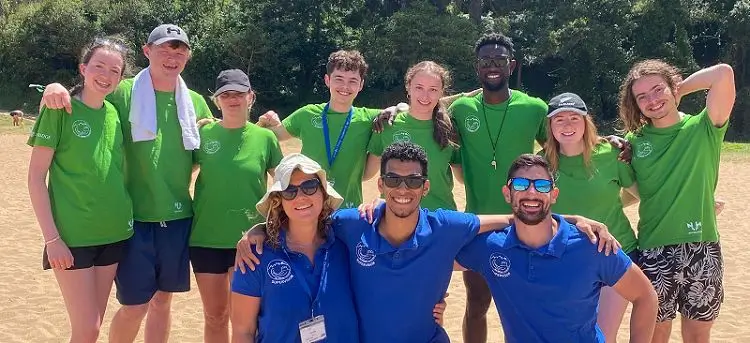
At the Village, the team is made up of international professionals with an educational vocation and training in child and youth coexistence. Their constant presence — in activities, in the dining room, in moments of rest — creates a bond of trust that allows children to feel accompanied and listened to at all times.
Human and close support
Children don’t remember so much what they are taught as how they are made to feel. That’s why the coaches at the Village don’t just correct or run activities; they get involved in day-to-day life, listen, observe and celebrate individual achievements. Every conversation in English is also an opportunity to build self-esteem, empathy, and confidence.
This closeness creates an emotionally safe environment where children feel free to express themselves, make mistakes and learn. Knowing that there is an adult who trusts and values them for their effort — not just their results — transforms the way they face challenges, both inside and outside the camp.
Teaching by example
A good coach teaches more by their actions than by their words. The international coaches at the Village convey values such as respect, cooperation, and joy through their own attitude. They are the first to take part, to encourage, to lend a hand when someone needs it.
This consistency is key: children learn by watching. When they see their role models act with empathy, effort and enthusiasm, they internalise those behaviours without the need for speeches. In this way, emotional learning becomes natural, and English becomes the common thread of a way of living together based on trust and inspiration.
The power of the group in emotional learning
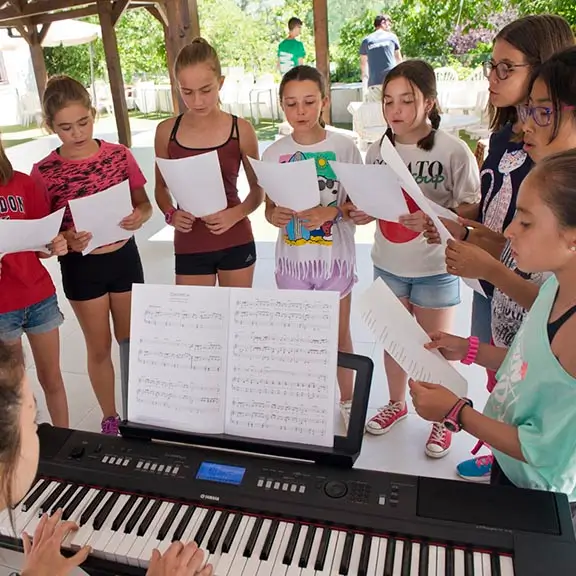
An English camp is a small community where each child learns to find their place. In this intense shared experience, the group becomes a source of support, motivation and personal growth. Playing, collaborating or sharing experiences creates bonds that strengthen empathy and teach the value of companionship.
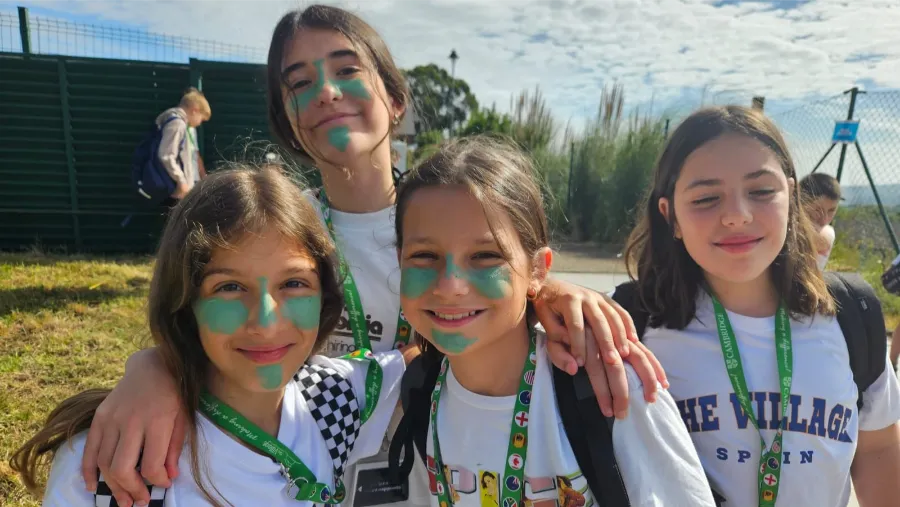
At the Village, group dynamics are at the heart of the methodology. Teams are formed with children from different nationalities and similar ages, which encourages communication in English and mutual respect. Shared challenges and projects reinforce cooperation and help children understand that progressing together is more enriching than doing so alone.
Learning to trust and be part of something bigger
During camp, children discover the balance between individuality and teamwork. They understand that their role is important, but real strength comes from the group. This experience, which seems simple, is a profound lesson: trusting others and allowing yourself to be helped is a way to grow.
The activities at the Village, from sports to creative workshops, are designed to foster that connection. Each match, each performance or each excursion is an opportunity to strengthen bonds, practise English and learn the value of collaboration.
Friendship as a catalyst for learning
When children feel part of a group that welcomes and values them, learning flows. English ceases to be a barrier and becomes the natural language of shared emotions: laughing together, solving a challenge, telling a story before bed.
These friendships, born among different cultures and accents, become lasting memories. At the Village, many children keep in touch with their international friends throughout the year, continuing language practice and strengthening their sense of belonging to a global community.
When English becomes a tool for life
At a real immersion camp, English ceases to be a goal and becomes the natural vehicle for every experience. Children do not study the language: they live it. They use it to ask for a ball, to tell an anecdote, to take part in a workshop or to cheer on a friend. And in doing so, they discover that English is not something to memorise, but something to feel and share.
At the Village, this naturalness is achieved thanks to a 100% immersive environment. With more than 200 hours of English over fifteen days, international coaches and friends from twelve nationalities, the language becomes the link that unites everyone. Learning happens without pressure or fear of mistakes, allowing children to express themselves freely and discover their own voice in another language.
Learning English through emotion
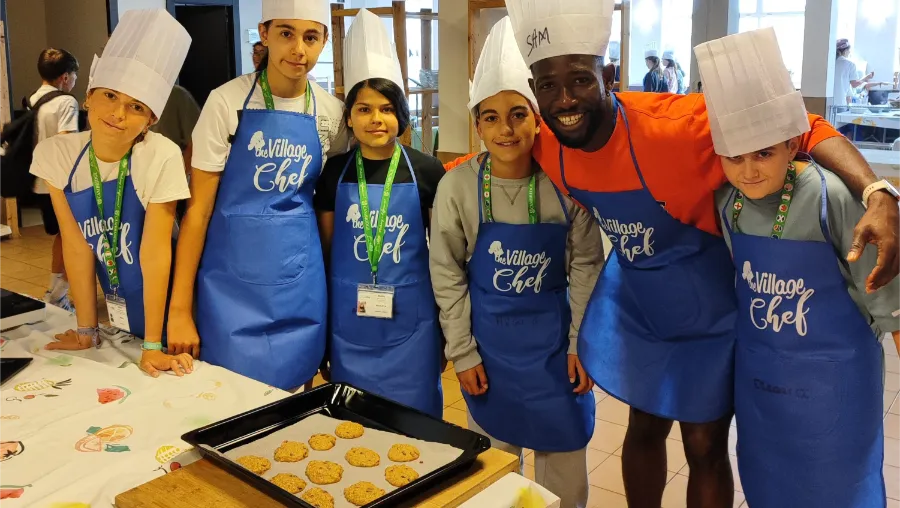
Words associated with an emotion are remembered better. That’s why learning at the Village is linked to meaningful experiences: the excitement of scoring a goal, the surprise of discovering a new recipe, the laughter during a show or the connection with a foreign friend.
In that context, the language is imprinted in memory naturally. It’s not an intellectual effort, but an emotional experience. That’s why many children return home speaking English spontaneously, hardly having opened a book, but with a confidence that no intensive course can teach.
From camp to the future
The impact of such an experience does not end in summer. Children who have experienced a total immersion environment like the Village return to school with a new relationship with the language: they no longer see it as a subject, but as a useful and accessible tool.
That perspective will accompany them in their academic and professional development. More importantly, it teaches them a lesson that goes beyond English: that learning can be exciting, that communication unites, and that every new language is an open door to the world.
Personal growth and lasting learning
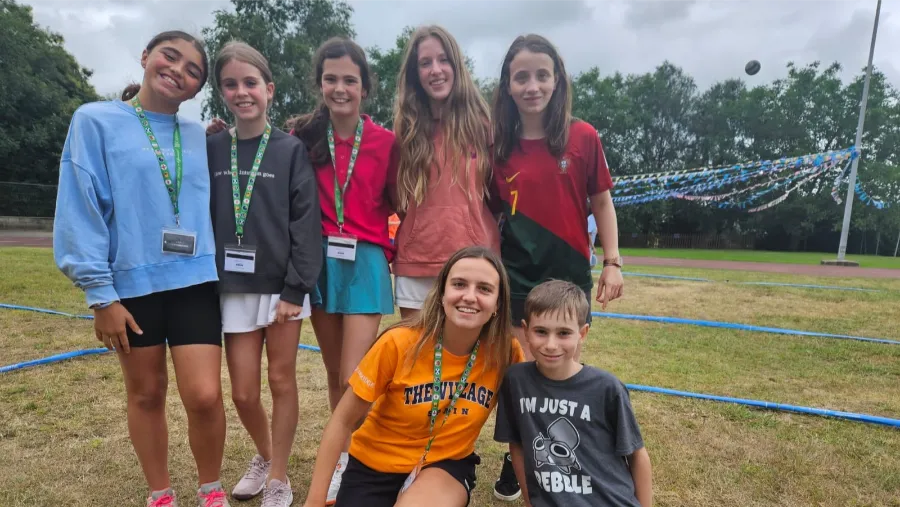
When camp ends, what children take home does not fit in a suitcase. Beyond new words or hours of English, they return with something much more valuable: confidence, autonomy and a more open view of the world. It’s the kind of learning that isn’t measured in grades, but in attitudes and emotions that stay with them for life.
At the Village, that transformation happens organically. Every challenge overcome, every international friendship and every conversation in English leaves an emotional mark. Children discover that they are capable of communicating, adapting, and enjoying learning. That self-confidence becomes the foundation on which they will continue to grow, inside and outside the classroom.
A summer that leaves its mark
Many parents agree on the same thing: after camp, their children come back different. More confident, more communicative, more curious. And most importantly, with a positive connection to English. That association between language and well-being is what makes the experience a lasting investment.
Instead of memorising rules, children internalise emotions. And those emotions translate into real learning. That’s why the effects of an experience like the Village go far beyond summer: they strengthen confidence, stimulate empathy and prepare children to face the future with enthusiasm and curiosity.
English as part of their personal story
A camp like this doesn’t just improve a language; it changes the way children relate to learning. English becomes part of their identity, tied to happy memories and experiences of growth. Every word learned carries the echo of a shared experience, and that emotional connection is what makes learning last.
That’s why, at the Village, we say that English isn’t studied, it’s lived. And living it, surrounded by nature, culture and friendship, is the best way for children to grow not just as students, but as people.