

When families compare English camps, they usually look at the programme, the activities or the number of language hours. However, there is a factor that is often overlooked and which has a direct impact on how children and teenagers learn: the environment in which they live the experience.
The place is not just the setting where the activities happen. It conditions how they interact, how they communicate and to what extent English ends up becoming part of their daily lives or remains something occasional.
When the environment stops being a simple backdrop
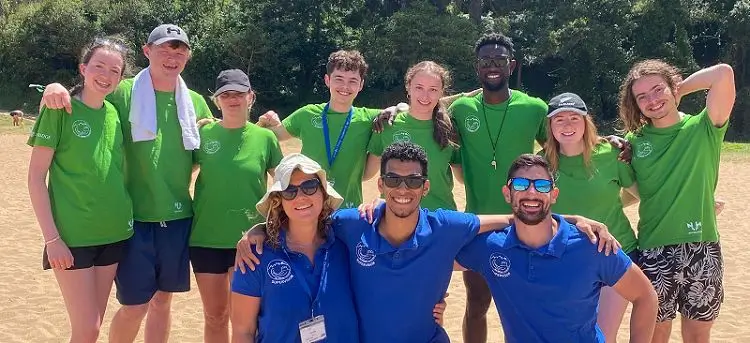
Not all spaces generate the same type of dynamics. A closed, urban or highly structured environment usually reproduces routines similar to those at school or an academy. On the other hand, when the camp takes place in a natural environment, the experience changes from day one.
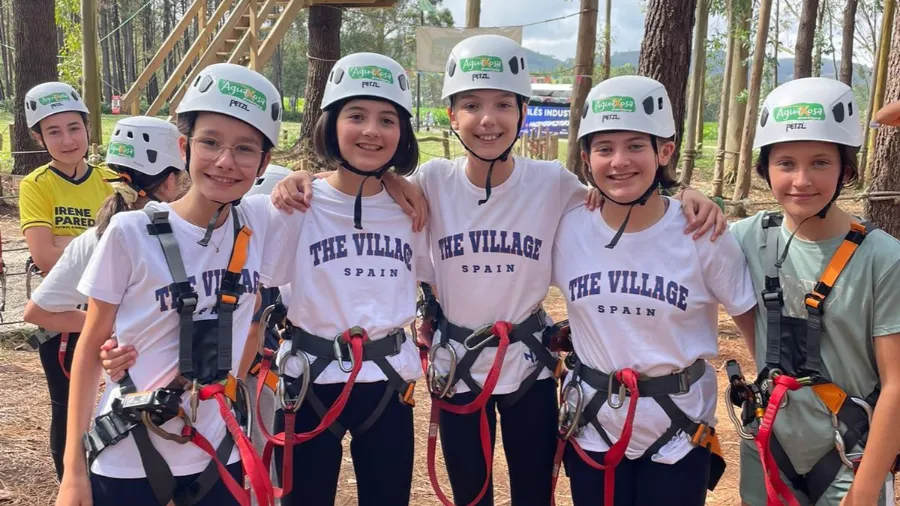
The journeys, the time spent outdoors together, the activities that do not always follow a rigid script… all of this creates more spontaneous situations. And in those situations, the language starts to be used more naturally, without anyone having to “activate” learning mode.
The environment, without teaching English by itself, creates the conditions for communication to make sense.
Fewer artificial stimuli, more real communication
One of the big changes that happens when participants leave their usual environment is the reduction of artificial stimuli. Fewer screens, fewer constant distractions and more direct interaction with other people.
In that context, speaking is no longer optional. To get organised, to understand an activity, to ask for help or simply to share a moment, they need to communicate. When the common language is English, it starts to be used as a practical tool, not as an academic goal.
This is where many participants start thinking less about whether they “speak well or badly” and more about whether the message gets across. That is one of the keys to real learning.
Living together outside the routine changes the way you learn
Leaving the usual environment also breaks automatisms. At home and at school, roles are very defined: who speaks, when, how and in which language. In a camp, especially when it takes place in a different environment, those rules become blurred.
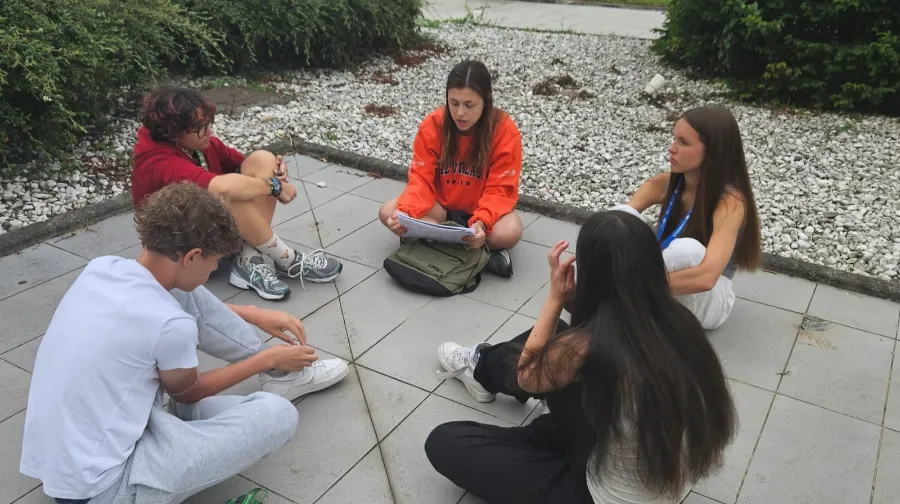
Living together continuously —during meals, free time, journeys— creates a group life where language is mixed with the experience. English appears in informal conversations, jokes, improvised games or quiet moments, not just in scheduled activities.
Learning like this does not feel like extra effort. It is a natural consequence of sharing time and space with others.
The environment and the confidence to express yourself
The physical space also affects how participants feel when communicating. Open, less formal environments and those further from the academic context usually reduce the pressure to do things “perfectly”.
For many children and teenagers, especially the more reserved ones, this detail is decisive. They dare to speak more, to make mistakes and to try again. Mistakes stop being something that gets constantly corrected and become part of the process.
When the environment helps, confidence grows and the use of the language becomes more fluent and spontaneous.
Why some environments make real immersion easier
It is not just about nature, but about how people live within it. Some environments encourage intense and continuous living together, where English can remain present throughout the day without being forced.
That is why, in places where natural spaces, outdoor activities and group living are combined, immersion becomes easier to maintain. In areas like Asturias, that balance between environment and living together allows many English camps in Asturias to create experiences where the language is constantly integrated into daily life.
When the environment leaves space to live the language
The environment does not teach vocabulary or grammar, but it does determine whether English is used outside of specific moments. When the context invites people to live together, move together and share real experiences, the language stops being something to “practise” and becomes something to live.
In this type of experience, learning English is not the explicit goal of every moment, but the natural result of being in the right place, with the right people and in an environment that makes it possible.