

Every summer, many families look for a camp where their children can improve their English without giving up outdoor activities. The idea of combining learning and adventure is very appealing, but it is not always clear what this combination really means or how it is experienced in the daily life of the camp.
The difference between a truly immersive experience and a programme where the language is secondary usually lies in the details: the language used outside the activities, the way of living together, and the role that English plays when there isn't a class taking place.
When English becomes part of daily life
In camps where the combination of English and adventure truly works, the language does not only appear at specific moments of the day. It is present from the moment participants wake up until the end of the day. It is used to organise groups, explain rules, share free time and interact with other campers and leaders.
In this type of programme, English stops feeling like a school subject and becomes a practical tool for living together. It is a way of learning that is very different from many traditional summer camps, where the language is limited to specific time slots and disappears outside of them — unlike what happens in an international English immersion summer camp in Spain.
Adventure as a real learning context
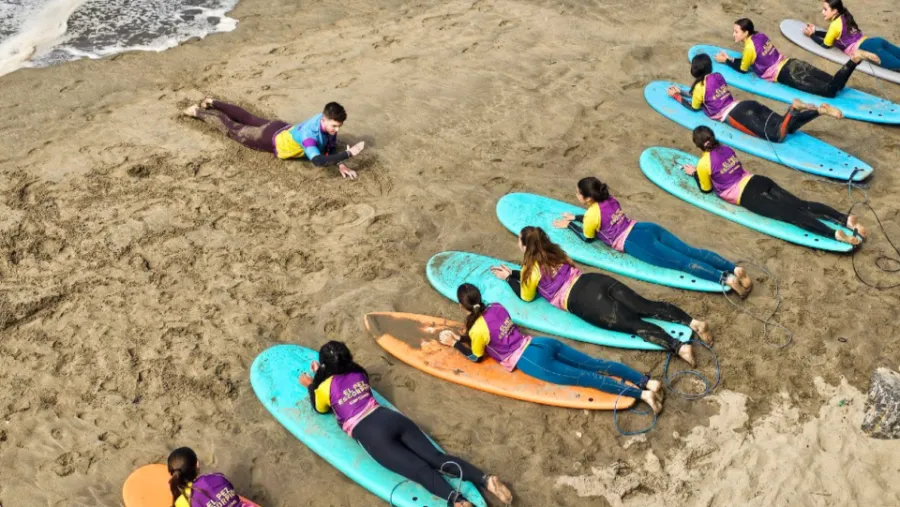
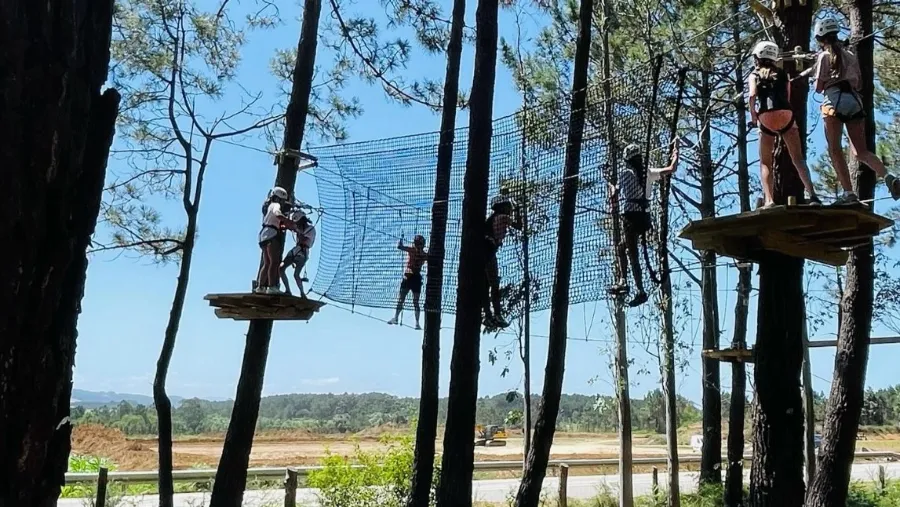
Adventure activities offer much more than just fun when they are well designed. Team sports, outdoor dynamics, cooperative challenges or creative workshops create real situations in which communication is necessary in order to truly participate.
When these experiences are carried out in English, the language is used spontaneously: to coordinate, ask for help, make decisions or express emotions. This type of learning, based on experience rather than memorisation, is usually more natural and lasting, especially for children and teenagers.
The role of the team and living together
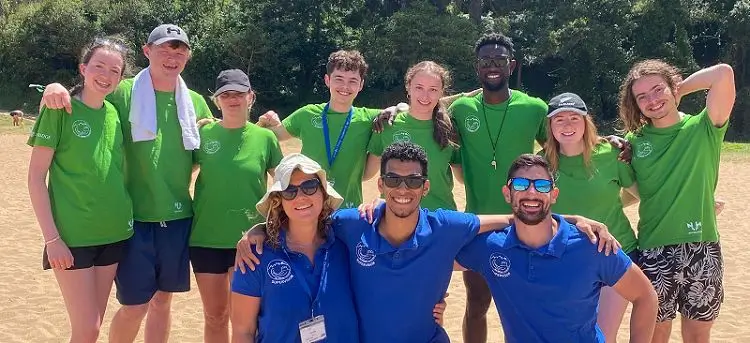
One of the factors that most influences whether the experience works is the human team. When the leaders and coaches use English as their usual language and accompany participants throughout the day, the language is naturally integrated into daily life.
Informal conversations, impromptu games or moments of rest are as important as the scheduled activities. It is here that many participants begin to loosen up, lose their embarrassment and gain confidence expressing themselves in another language.
The environment also matters
The place where the camp takes place largely determines the type of experiences that can be had. Natural environments make adventure easier, help disconnect from everyday life, and create real situations for living together.
That is why many programmes opt for locations such as Asturias, where nature allows the combination of outdoor activities with intense and close group life. In this type of environment, English camps in Asturias usually offer a very favourable context for the language to be used constantly and spontaneously.
Not all camps combine English and adventure in the same way
One of the most common mistakes is thinking that it is enough to add attractive activities to guarantee learning. In some camps, adventure is mainly experienced in Spanish and English is limited to basic instructions or occasional moments.
When there is no linguistic continuity during daily life, the experience can be fun, but real progress in the language tends to be limited. The key is that English is also present outside formal activities.
Age, autonomy and shared experience
The effectiveness of this type of programme also depends on the age and level of autonomy of the participants. As they grow up, their ability to interact, collaborate and communicate more consciously increases.
In these cases, the combination of adventure, living together and real use of the language tends to have an especially positive impact, not only on a linguistic level, but also in terms of personal confidence and social skills.
In the end, the camps that truly combine English and adventure are not the ones that offer the most activities, but those that manage to make the language a natural part of everything that happens. When English is lived, shared and needed to participate, learning is no longer an imposed goal and becomes a logical consequence of the experience.